[gtranslate]


[PT]
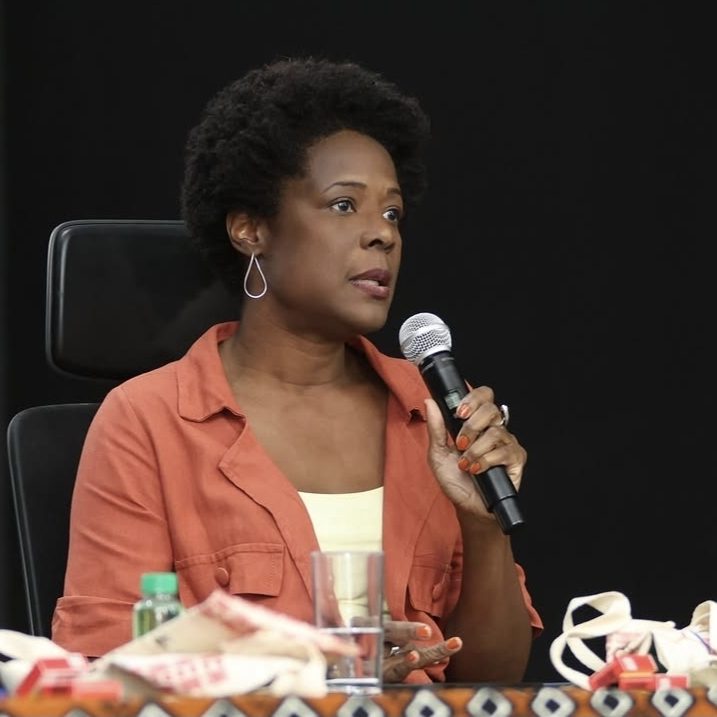
A professora Rita Silvana Santana, pesquisadora da Cátedra UNESCO em Educação Aberta e Tecnologias para o Bem Comum, participou no último dia 8 de junho da Roda de Conversa “A Escola que Planta: Valorizando Saberes Ancestrais e Cultivando Relações Antirracistas”, realizada no Centro de Cultura Manuel Querino, Praça Thomé de Souza, no Pelourinho, em Salvador (BA), às 15h.
O evento integrou a programação dos Diálogos Antirracistas: CEERT 35 Anos – Transição Justa, Educação e Juventudes, celebração que marca três décadas e meia de atuação do Centro de Estudos das Relações de Trabalho e Desigualdades em prol de uma educação mais justa e igualitária.
Rita Silvana é co-criadora do guia homônimo lançado na ocasião — fruto de parceria entre o CEERT e o Instituto Alana —, que propõe caminhos concretos para integrar a Educação Ambiental e a Educação para as Relações Étnico-Raciais, reconhecendo os saberes de povos indígenas, quilombolas e comunidades negras como fundamentos para a construção de futuros mais justos e sustentáveis.
Na roda de conversa, mediada por Valdecir Nascimento, Rita Silvana esteve ao lado de Cida Bento (CEERT), Gabriel Salgado (Instituto Alana), Taiana Simões, Monica Passarinho e Eduardo Feitoza.
Sobre o guia e sua perspectiva de educação antirracista, a pesquisadora afirmou:
“Pensar uma educação baseada na natureza é também trazer um pouco do conceito de estudar um bom trabalho. Ao apresentarmos uma perspectiva antirracista, trazemos as nossas potências afrodiaspóricas para pensar e fazer o mundo em que acreditamos — um mundo que já construímos todos os dias.”
A participação de Rita Silvana neste evento reafirma o compromisso da Cátedra com agendas que articulam educação, tecnologias abertas e justiça social — reconhecendo que conhecimentos ancestrais e saberes comunitários são parte indissociável de qualquer projeto de bem comum.
[EN]
Researcher from the Chair takes part in the launch of an anti-racist guide in Salvador
Rita Silvana Santana, researcher at the UNESCO Chair on Open Education and Technologies for the Common Good, participated on June 8th in the Round Table “The School that Plants: Valuing Ancestral Knowledge and Cultivating Anti-Racist Relations”, held at the Centro de Cultura Manuel Querino, Praça Thomé de Souza, in the Pelourinho neighborhood, Salvador, Bahia, at 3 PM.
The event was part of the Anti-Racist Dialogues: CEERT 35 Years – Just Transition, Education and Youth, a celebration marking three and a half decades of work by the Center for Studies of Labor Relations and Inequalities in pursuit of a fairer and more equal education.
Rita Silvana is co-creator of the eponymous guide launched at the event — the result of a partnership between CEERT and Instituto Alana — which proposes concrete pathways to integrate Environmental Education and Education for Ethnic-Racial Relations, recognizing the knowledge of indigenous peoples, quilombola communities and Black communities as foundations for building more just and sustainable futures.
The round table, moderated by Valdecir Nascimento, brought together Rita Silvana alongside Cida Bento (CEERT), Gabriel Salgado (Instituto Alana), Taiana Simões, Monica Passarinho and Eduardo Feitoza.
On the guide and her vision of anti-racist education, the researcher stated:
“Thinking about nature-based education also means bringing in the concept of studying good work. By presenting an anti-racist perspective, we bring our Afro-diasporic strengths to think and make the world we believe in — a world we are already building every day.”
Rita Silvana’s participation in this event reaffirms the Chair’s commitment to agendas that connect education, open technologies and social justice — recognizing that ancestral knowledge and community-based ways of knowing are an inseparable part of any project for the common good.